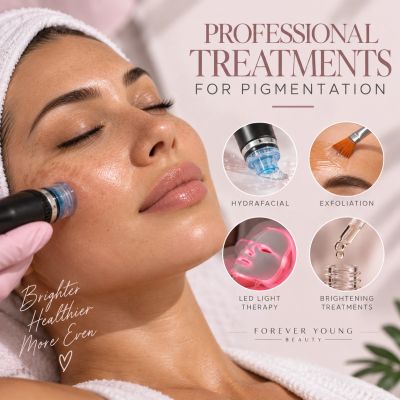
Understanding Pigmentation: Causes, Types & Treatments

Dark spots, uneven skin tone, patches of discoloration and lingering marks after breakouts are some of the most common skin concerns. But pigmentation isn't one single condition. Sun exposure, hormones, inflammation, acne, certain medications and even irritation from products can all contribute to excess pigment.
Understanding why pigmentation developed is an important first step in choosing the right skincare and professional treatments.
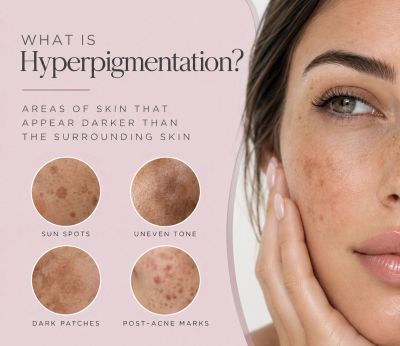
What Is Hyperpigmentation?
Hyperpigmentation occurs when areas of the skin become darker than the surrounding skin. Our skin contains cells called melanocytes, which produce melanin - the pigment responsible for the colour of our skin, hair and eyes.
When skin is exposed to UV radiation, inflammation, hormonal influences or certain types of irritation, melanin production can increase. This can result in brown spots, uneven tone, dark patches or marks left behind after acne.
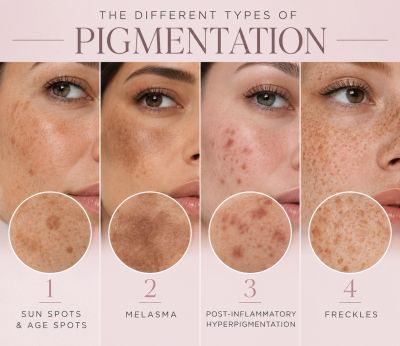
The Different Types of Pigmentation
1. Sun Spots & Age Spots
Flat brown spots on the face, chest, shoulders and hands are often the result of accumulated sun exposure. Also known as solar lentigines, these spots tend to become more noticeable with age as years of UV exposure accumulate. Daily sun protection is one of the most important ways to help prevent existing spots from becoming darker and new ones from developing.
2. Melasma
Melasma typically appears as symmetrical brown, tan or grey-brown patches, often across the cheeks, forehead, upper lip, nose or chin. Unlike a typical sun spot, melasma is often influenced by a combination of hormones, genetics, UV exposure and visible light.
Pregnancy, hormonal contraceptives and other hormonal changes may contribute. Melasma also tends to be chronic and can return, so the goal is generally long-term management rather than promising permanent removal. Sun protection, appropriate skincare and avoiding unnecessary irritation are particularly important.
3. Post-Inflammatory Hyperpigmentation
Have you ever had a pimple disappear but leave a brown mark behind? That's often post-inflammatory hyperpigmentation (PIH). Inflammation or injury can trigger additional pigment production while the skin heals. PIH can develop following:
- Acne
- Picking at blemishes
- Eczema or rashes
- Burns or injuries
- Waxing
- Irritating skincare
- Over-exfoliation
This is why picking at breakouts or aggressively exfoliating the skin can sometimes make discoloration worse.
4. Freckles
Freckles are small, flat areas of increased pigmentation influenced by genetics and sun exposure. They commonly become darker during summer and may fade somewhat during months with less sun exposure. Any spot that changes significantly in colour, shape, size or appearance should be assessed by an appropriate healthcare professional before cosmetic treatment.
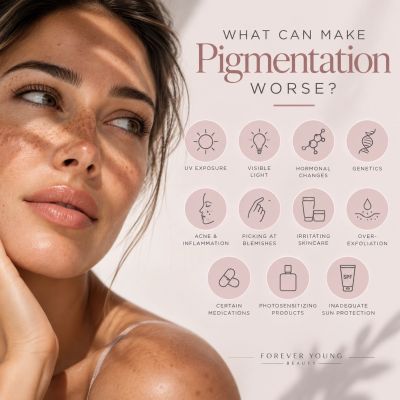
What Can Make Pigmentation Worse?
- UVA and UVB exposure
- Visible light
- Hormonal changes
- Genetics
- Acne and inflammation
- Picking at blemishes
- Irritating skincare
- Over-exfoliation
- Certain medications
- Some photosensitizing products combined with sunlight
- Inadequate sun protection
That's why pigmentation shouldn't simply be scrubbed or exfoliated away. Controlling the triggers is just as important as treating the pigment that's already there.
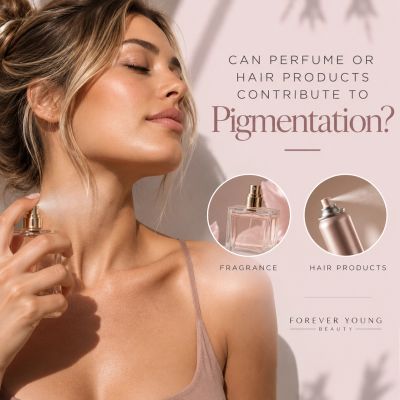
Can Perfume or Hair Products Contribute to Pigmentation?
Absolutely - and it's something many people don't think about. Certain fragrance ingredients and essential oils, particularly some citrus-derived ingredients, can cause phototoxic or photoallergic skin reactions when combined with sunlight in susceptible people.
The resulting irritation or inflammation may leave lingering discoloration. For example, repeatedly spraying perfume onto the neck or chest before sun exposure may be problematic for some people. Hair sprays and fragranced styling products can also land along the forehead, temples, face and neck.
This doesn't mean hairspray or perfume automatically causes pigmentation. The concern is the potential combination of photosensitizing ingredients, irritation and UV exposure. Protecting your face while spraying hair products and avoiding fragrance on areas that will receive significant sun exposure are simple precautions.
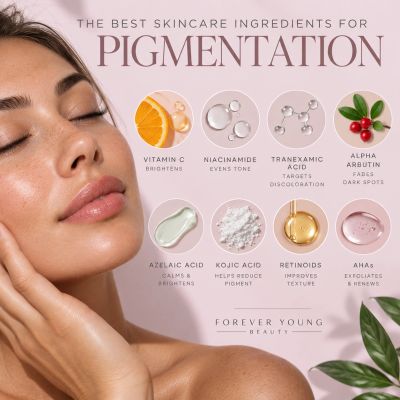
The Best Skincare Ingredients for Pigmentation
You don't need every ingredient at once. A simple, consistent routine is usually much better than overwhelming the skin with too many active products.
- Vitamin C - An antioxidant that helps brighten the appearance of skin and protect against oxidative stress. Look for L-ascorbic acid, tetrahexyldecyl ascorbate or sodium ascorbyl phosphate.
- Niacinamide - Vitamin B3 can help improve uneven-looking skin tone while supporting the skin barrier and calming redness.
- Tranexamic Acid - A popular ingredient in products formulated for stubborn discoloration and uneven skin tone, including melasma-focused skincare.
- Alpha Arbutin - Helps target pathways involved in melanin production and can be beneficial for dark spots and post-acne marks.
- Azelaic Acid - A great option when pigmentation and inflammation occur together. It can be particularly useful for acne-prone skin with lingering post-inflammatory marks.
- Kojic Acid - Helps target tyrosinase, an enzyme involved in melanin production. Introduce it gradually, as it may irritate sensitive skin.
- Retinoids - Retinol and other retinoids can help increase skin cell turnover and improve uneven pigmentation, texture and signs of aging over time. Introduce them gradually and speak with your healthcare provider about retinoid use during pregnancy or breastfeeding.
AHAs - Glycolic, lactic and mandelic acids can help exfoliate surface cells and improve dull, uneven-looking skin. Avoid overusing them - irritation and inflammation can potentially worsen pigmentation.
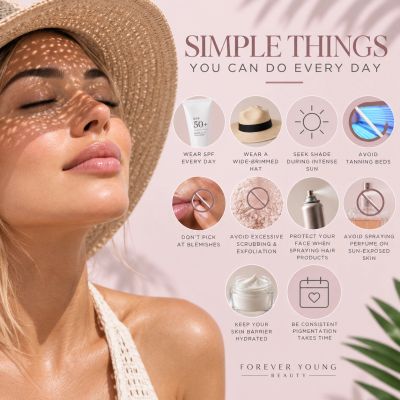
Simple Things You Can Do Every Day
- Wear SPF every day
- Wear a wide-brimmed hat outdoors
- Seek shade during intense sun
- Avoid tanning beds
- Don't pick at blemishes
- Avoid excessive scrubbing and exfoliation
- Protect your face when spraying hair products
- Avoid spraying perfume directly onto sun-exposed skin before prolonged outdoor exposure
- Keep your skin barrier hydrated
- Be consistent - pigmentation takes time to improve
Professional Treatments for Pigmentation
The best professional treatment depends on the type and cause of your pigmentation. Depending on your skin, professional options may include HydraFacial, carefully selected exfoliation, LED light therapy and other brightening treatments. More aggressive doesn't always mean better, particularly when dealing with melasma or pigmentation-prone skin.
Brightening & Pigmentation HydraFacial
At Forever Young Beauty, our Brightening & Pigmentation HydraFacial combines HydraFacial exfoliation and hydration with targeted brightening and calming steps to help improve the appearance of sun damage, post-acne marks, dullness and uneven skin tone.